Which 3D printing technology to produce medicines?
3D printing represents a promising technology for the manufacture of reliable and safe personalized medicines. Thanks to 3D printing, it is possible to customize treatments to meet the specific needs of each patient. In addition, this technology makes it possible to improve the acceptability of treatments by modifying the shape of the medicines. In the pharmaceutical industry, 3D printing accelerates drug development by offering rapid prototyping capability. Pharmaceutical 3D printing also allows for more testing throughout the development process. There are several 3D printing technologies available on the market, each with its advantages and disadvantages regarding drug production.
To each technology its use
Need to produce personalized medicines or accelerate the development of a new medicine? Each 3D printing technology will adapt to different needs. Explore with MB Therapeutics, a pioneer in pharmaceutical 3D printing, the different possibilities available today.

Fused filament fabrication 3D printing
FFF 3D Printing (Fused Filament Fabrication)
FDM or FFF printing technology is a common 3D printing method that uses a molten thermoplastic filament to build an object layer by layer. This technology is particularly suitable for the production of personalized medicines that are not temperature sensitive.
Filament production involves a high level of mastery of extrusion technology and a 3D print head specifically developed for pharmaceutical filaments.
FFF technology is an affordable, easy-to-use, and secure technology because the user will handle solid materials, which limits the risk of contamination.
This is why MB Therapeutics will integrate pharmaceutical filament technology into its pharmaceutical printer MED-U Modular.
Gels/pastes 3D printing
Gel printing technology uses a gel or paste that is deposited layer by layer to form a solid object. This technology allows for rapid protoformulation. If your active ingredient is not water-sensitive, this technology is particularly suitable for manufacturing personalized medicines. This is why MB Therapeutics has integrated this technology into the MED-U Modular.
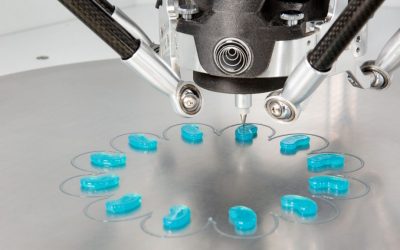
3D printing of gels by volumetric dosing
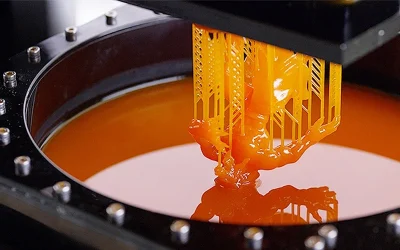
Stereolithography 3D printing
Source: 3DNative
SLA 3D Printing (Stereolithography)
SLA technology uses a liquid resin that is cured using a laser to form a solid object layer by layer. In the pharmaceutical field, few excipients can be in resin form. In addition, it is necessary to control the monomer residues present in the resin as they can pose a health risk.
SLS 3D Printing (Selective Laser Sintering)
SLS technology uses a polymer powder that is fused layer by layer using a laser to form a solid object. A wide variety of Active Pharmaceutical Ingredients is sensitive to the laser, and the use of powder makes its daily use difficult.
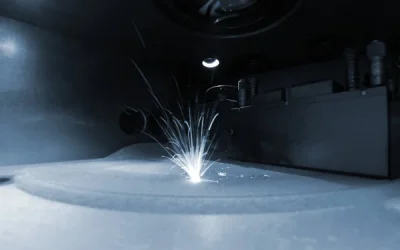
3D printing by selective laser sintering
Material extrusion 3D printing techniques (gels and FFF) are very widespread 3D printing technologies used in personalized medicine. These processes allow the creation of medicines with specific dosages according to patient needs. Simple, affordable, and widely accessible, these 3D printing techniques are perfectly suited to the personalized medicine applications that MB Therapeutics offers today with the MED-U Modular.
Previous article
©️2026 MB Therapeutics